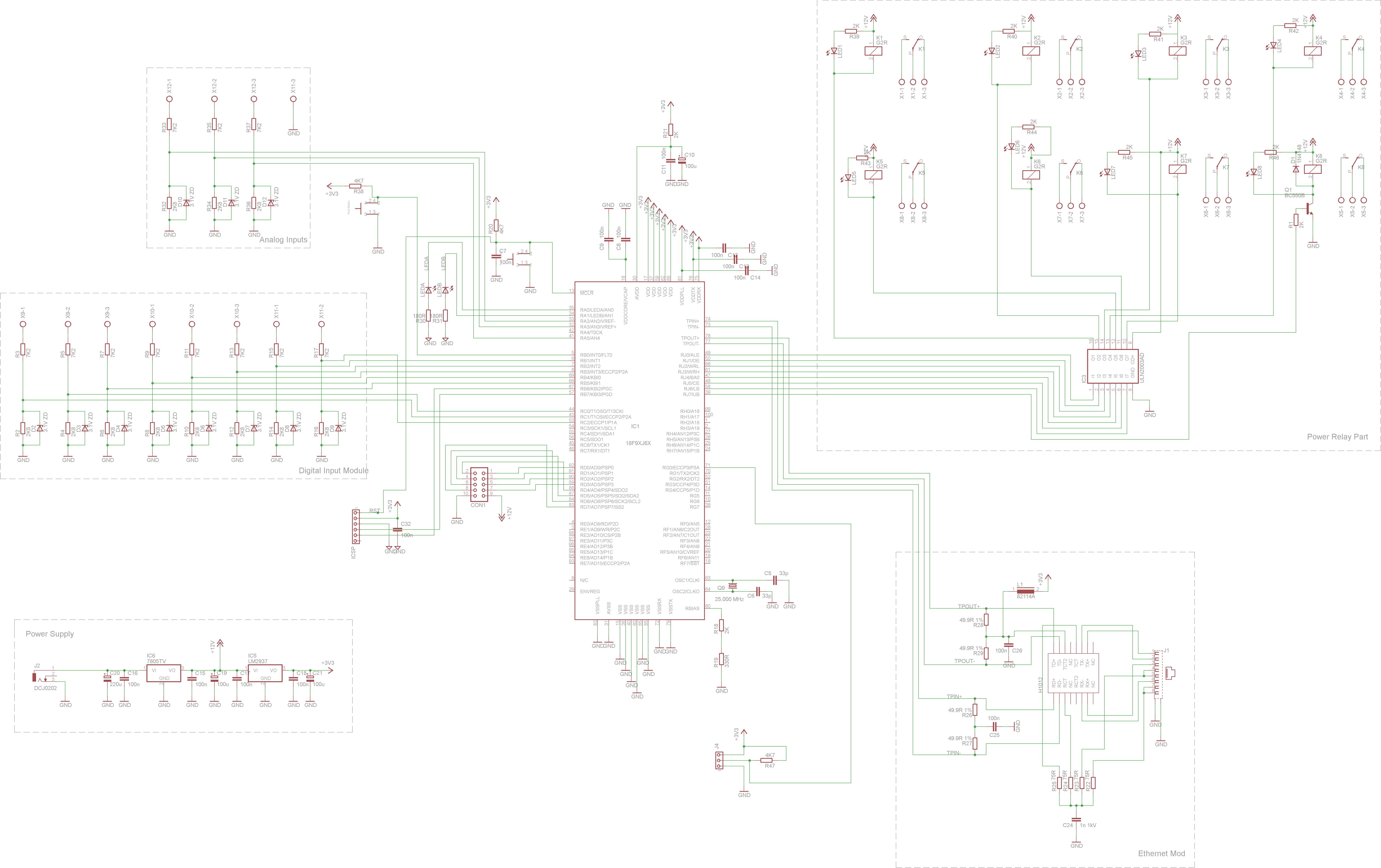
After finishing the work with the Automatic Weather Station an idea about creating an ethernet controlled relay board came to my mind. Since the whole TCP/IP stack for the embedded PIC chip was already developed for the weather station, It wasn't so diffucult to set it up for an application such as a simple relay controller and digital I/O aquisitor.
I have used Microchip's PIC 18F97J60 which happens to be the most powerful 8-bit microcontroller for embedded ethernet applications, which Microchip offers. It has an integrated ethernet IEEE802.3 controller, which was the main reason for this choice. Moreover it has 128K of Flash, a lots of I/O peripherals, as well as also some 10bit ADCs.
Firstly I made a developement board for the whole chip, since that it could be used not only for the development of the relay board, but also other devices. The following pictures show the development board i designed (it says Weather station development board since my initial idea is to port the code of the station for this chip):

The PCB as well as the soldering was done by me at home, well after more than 10+ years of experience with home made PCBs I have developed good photolithographic skills, therefore a TQFP100 package is just a piece of cake.

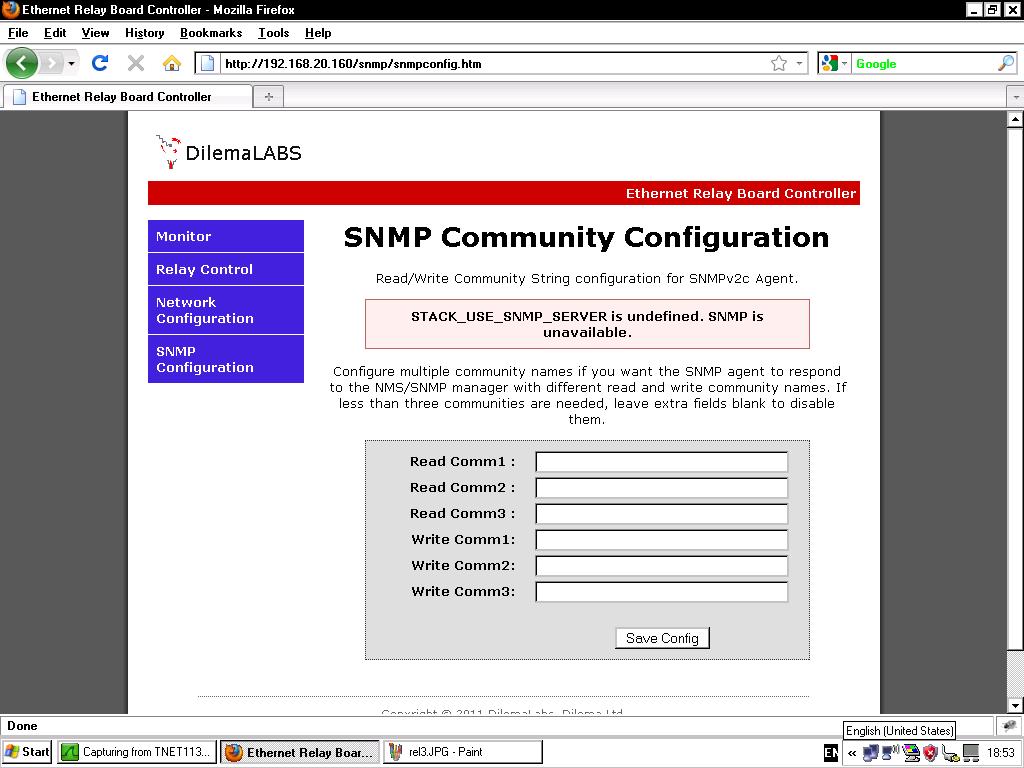
The ethernet relay board controller output (browser side), neglect the Windows-based browser and OS in the screenshot, I have windows only on my old laptop, because a bunch of hardware drivers are missing to be able to run linux properly (Red Hat my fav particulary). The DilemaLABS logo, is just a brand that I put and will continue putting on my further created devices.
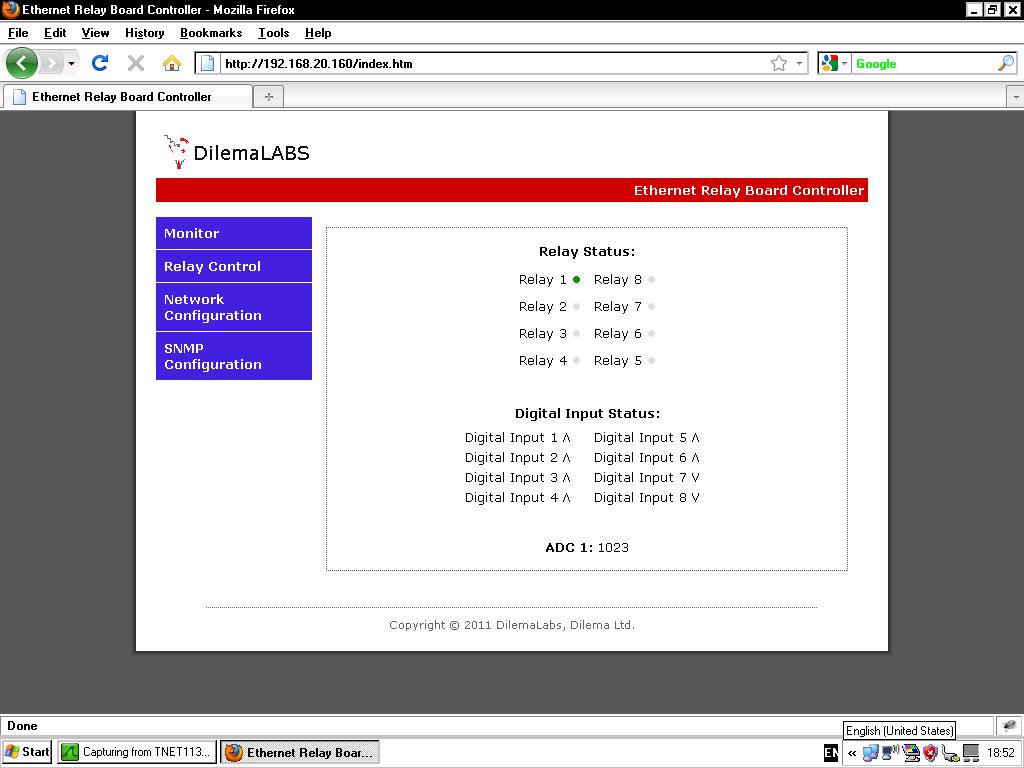
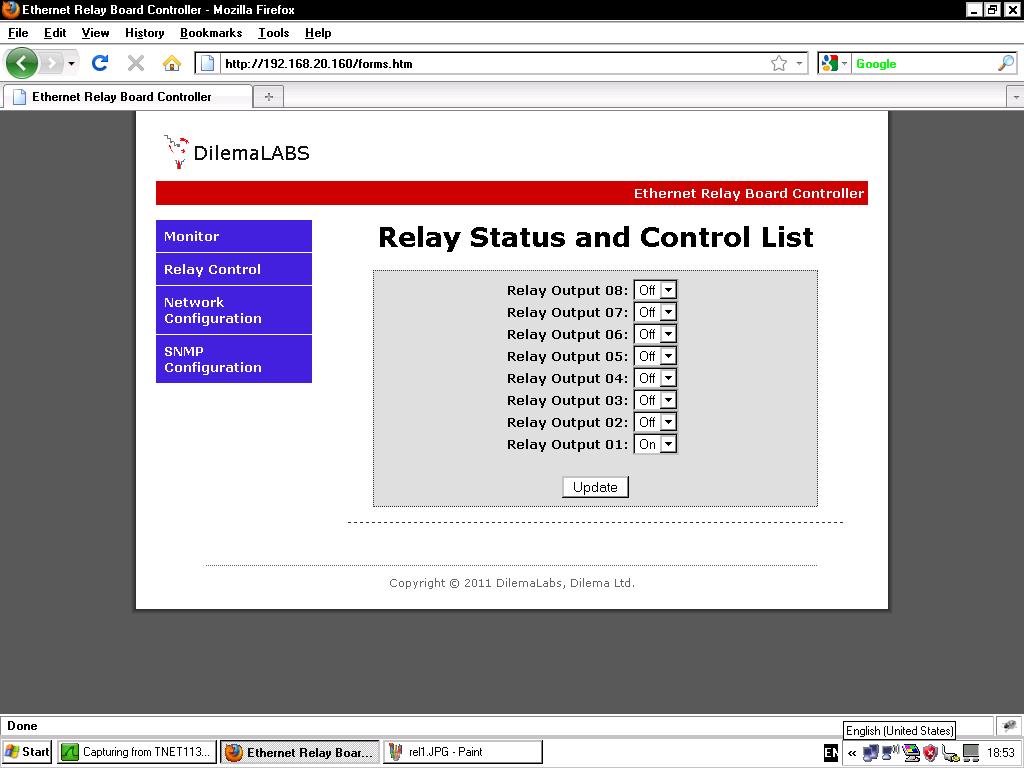
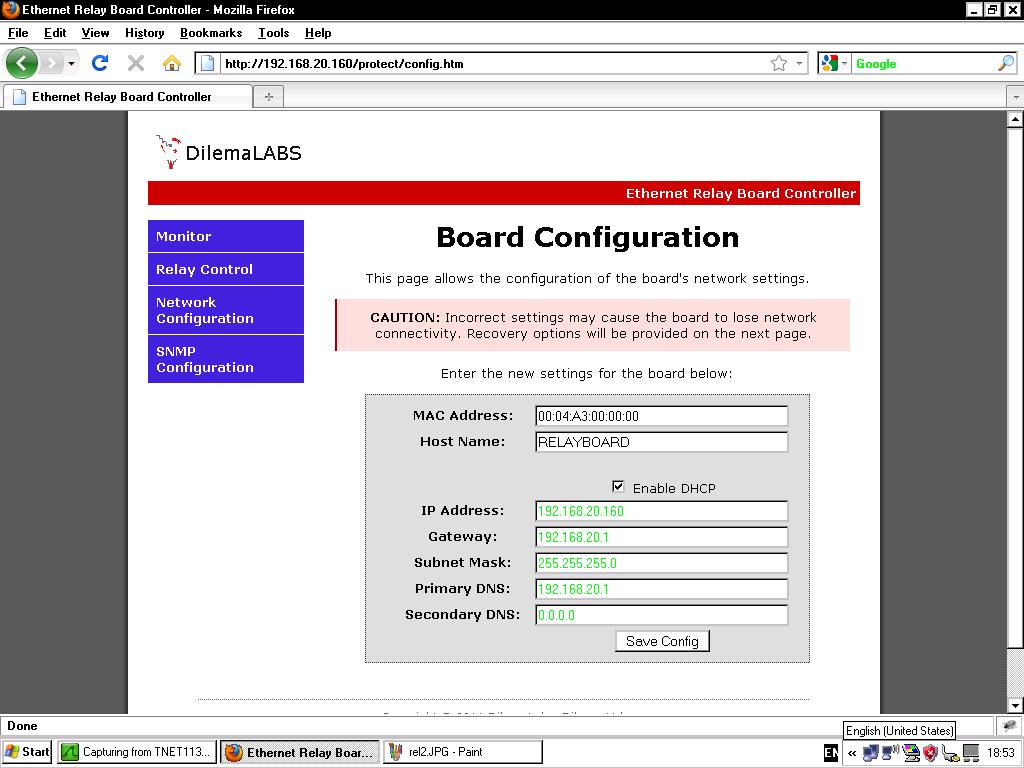
Now I only need to create a new PCB integrating the relays and input connectors. This is what I've done so far, I don't really like how it looks, so I'll probably redo it again from scratch. Time is the only thing that stops me.
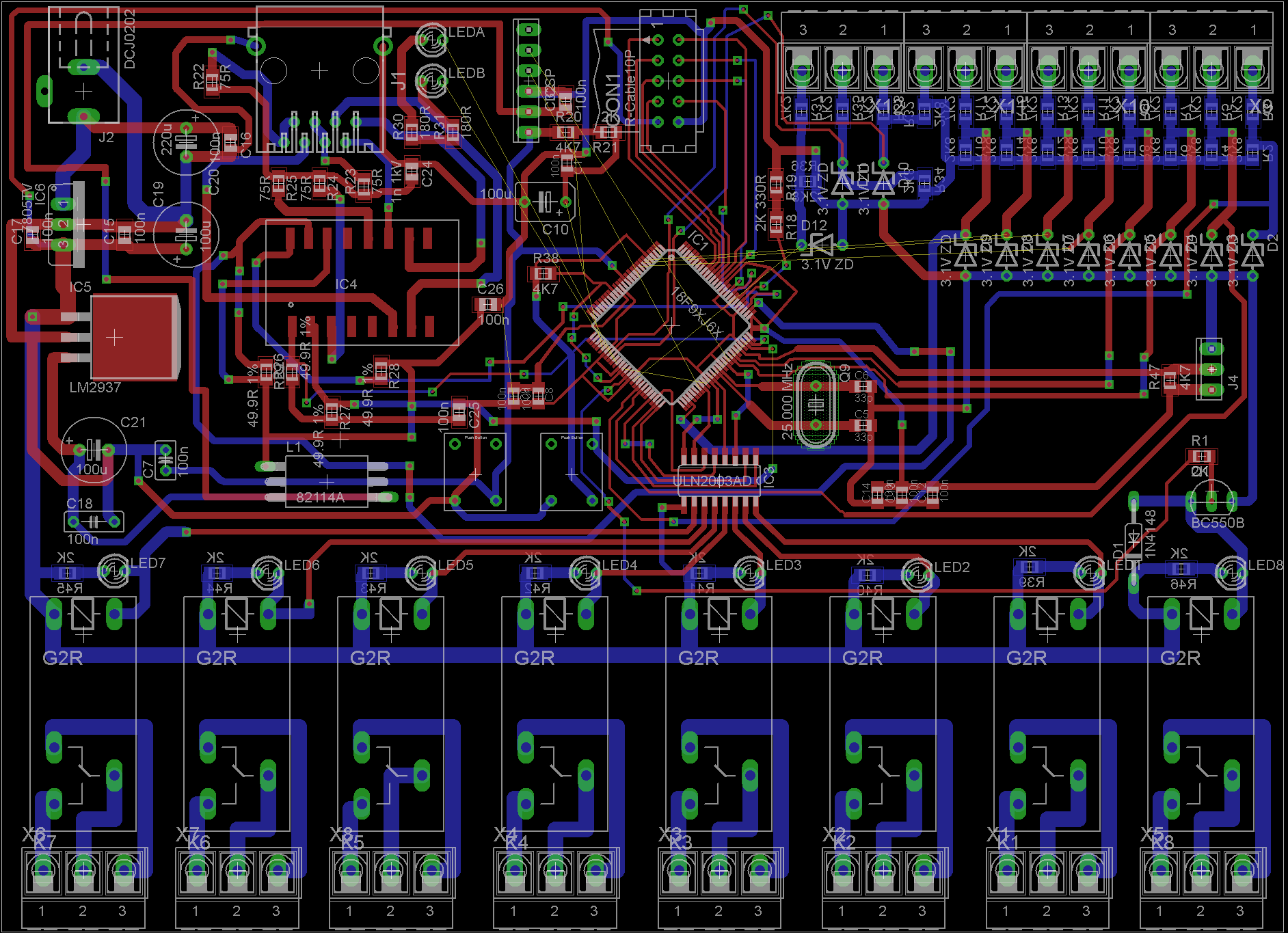
A schematic can be found here.
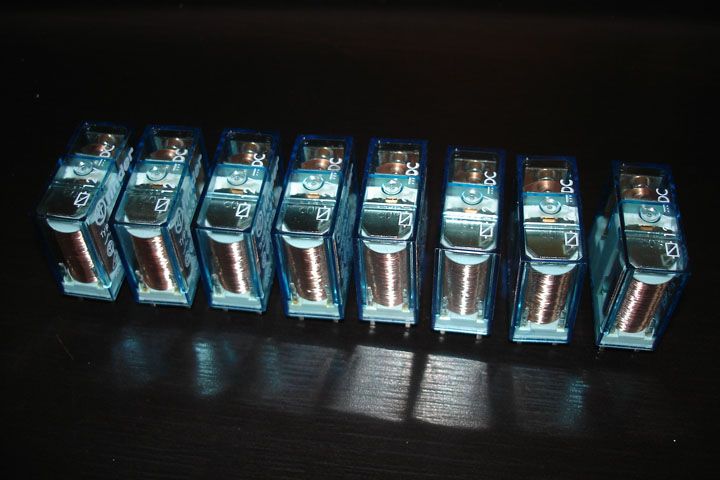
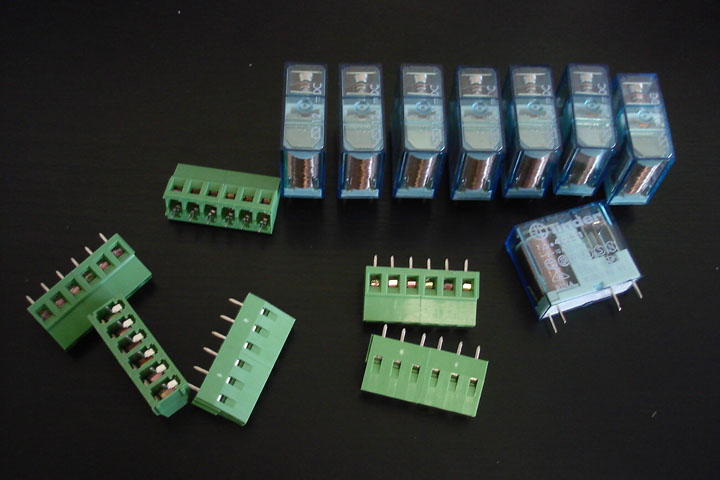
I am going to use somewhat "heavy-duty" relays when it comes to reliability. The ones I've chosen are branded Finder - Italian relay manufacturer for sewing and knitting machines. They are popular with their reliability among the industrial automation "societies".
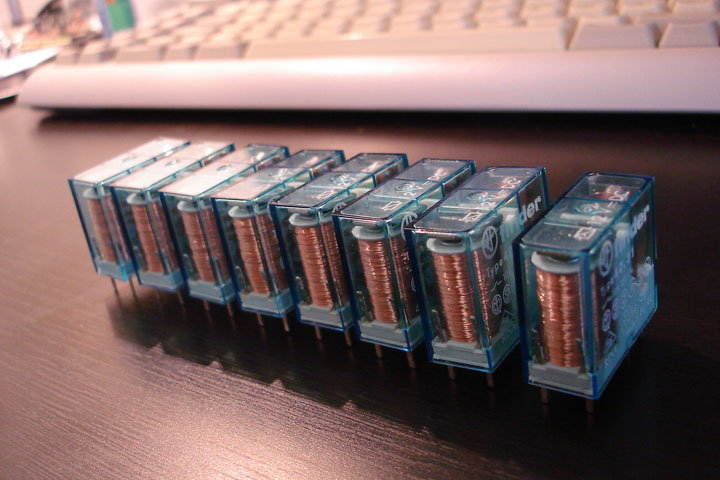
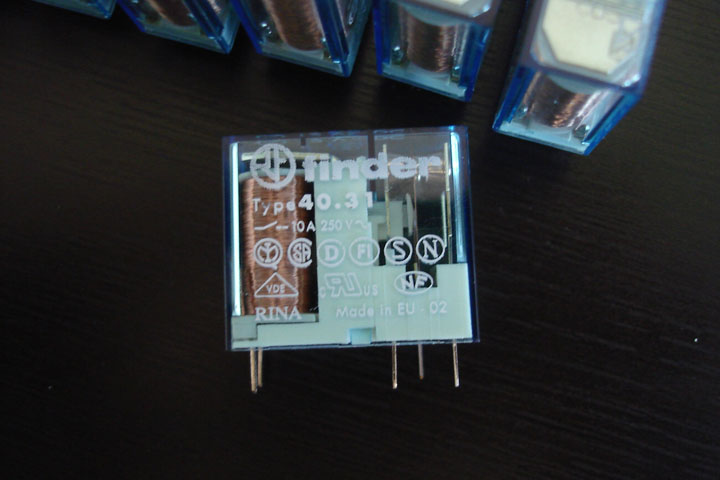
Soon I will add pictures of the ready made and assambled PCB.